A Junk-Shop Habit, a Victorian Breakfast Set, and the Pleasure of Knowing What You’ve Got
We all have our secrets. Mine is a weakness for junk shops — not the curated antiques centres with track lighting and laminated labels, but the places where nothing quite matches and the shelves tell stories out of order. You go in for a mug or a plant pot and come out with questions.
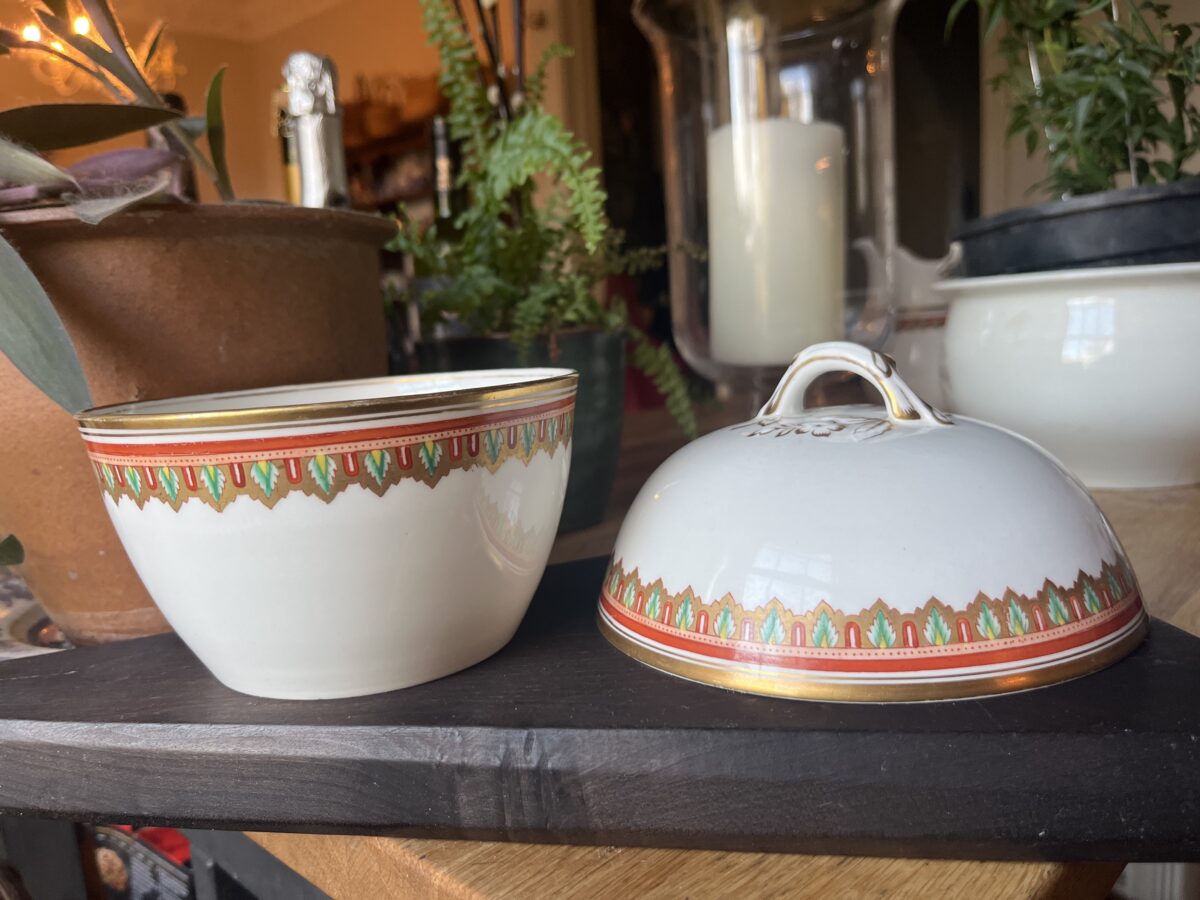
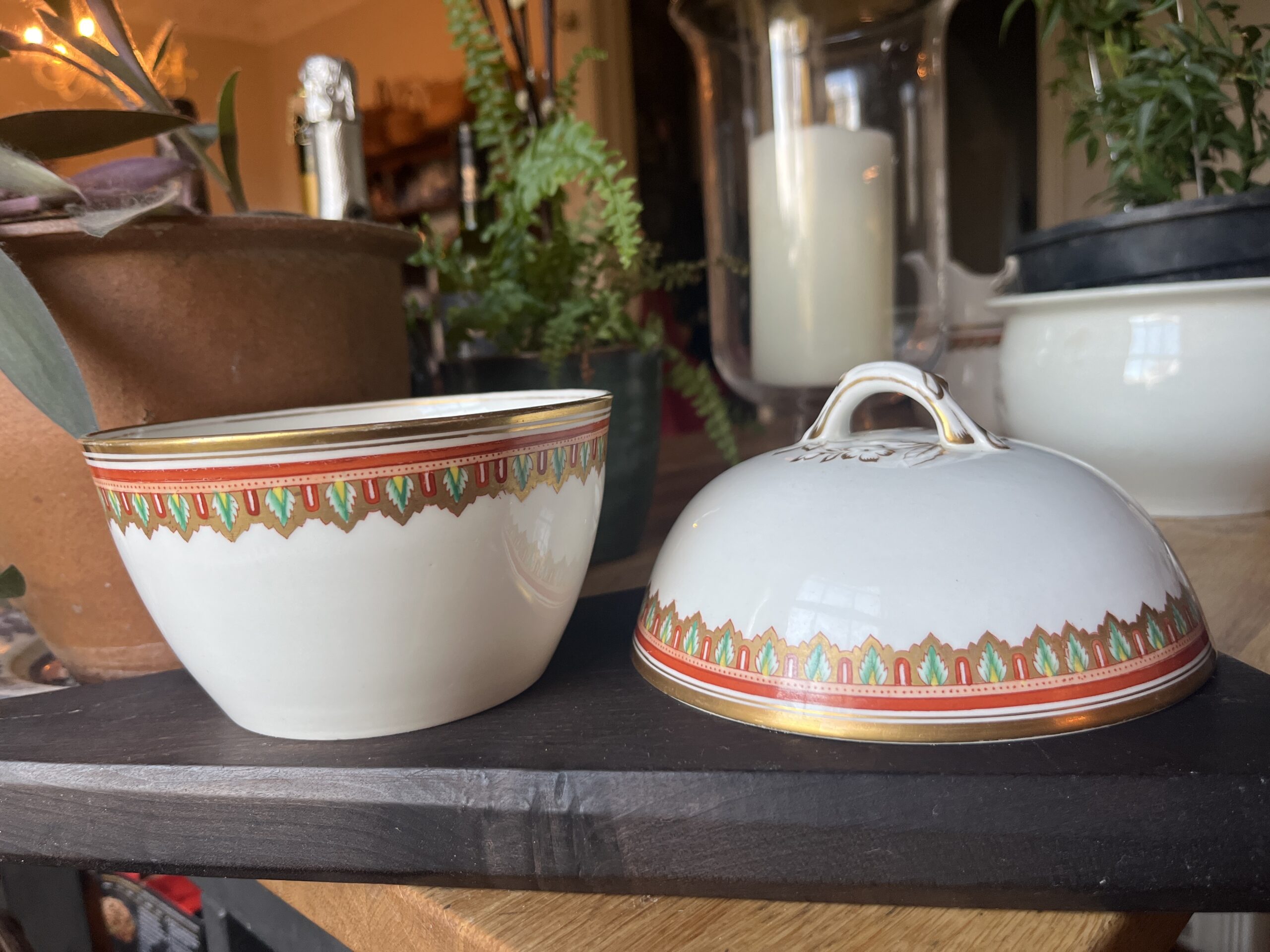
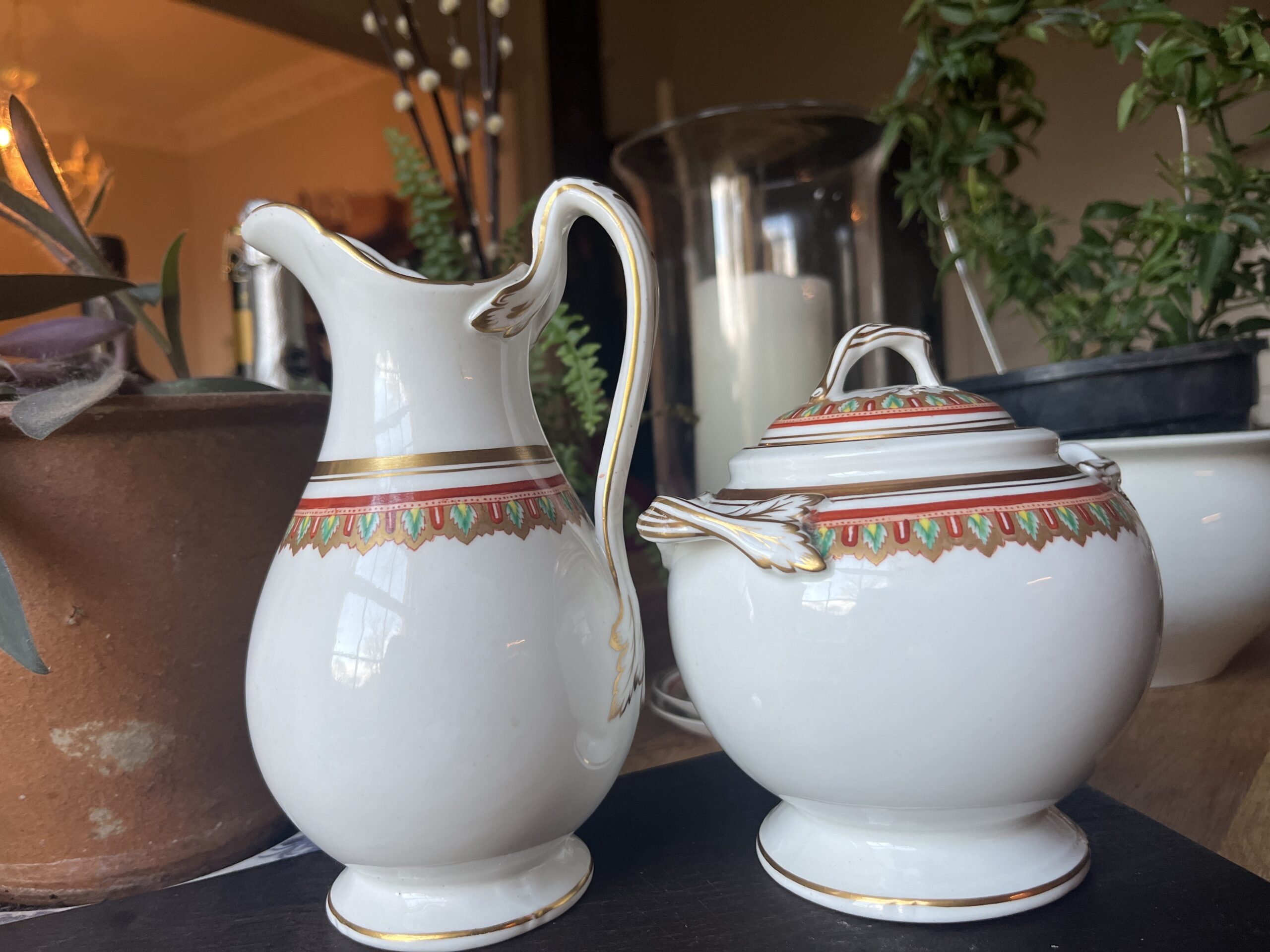
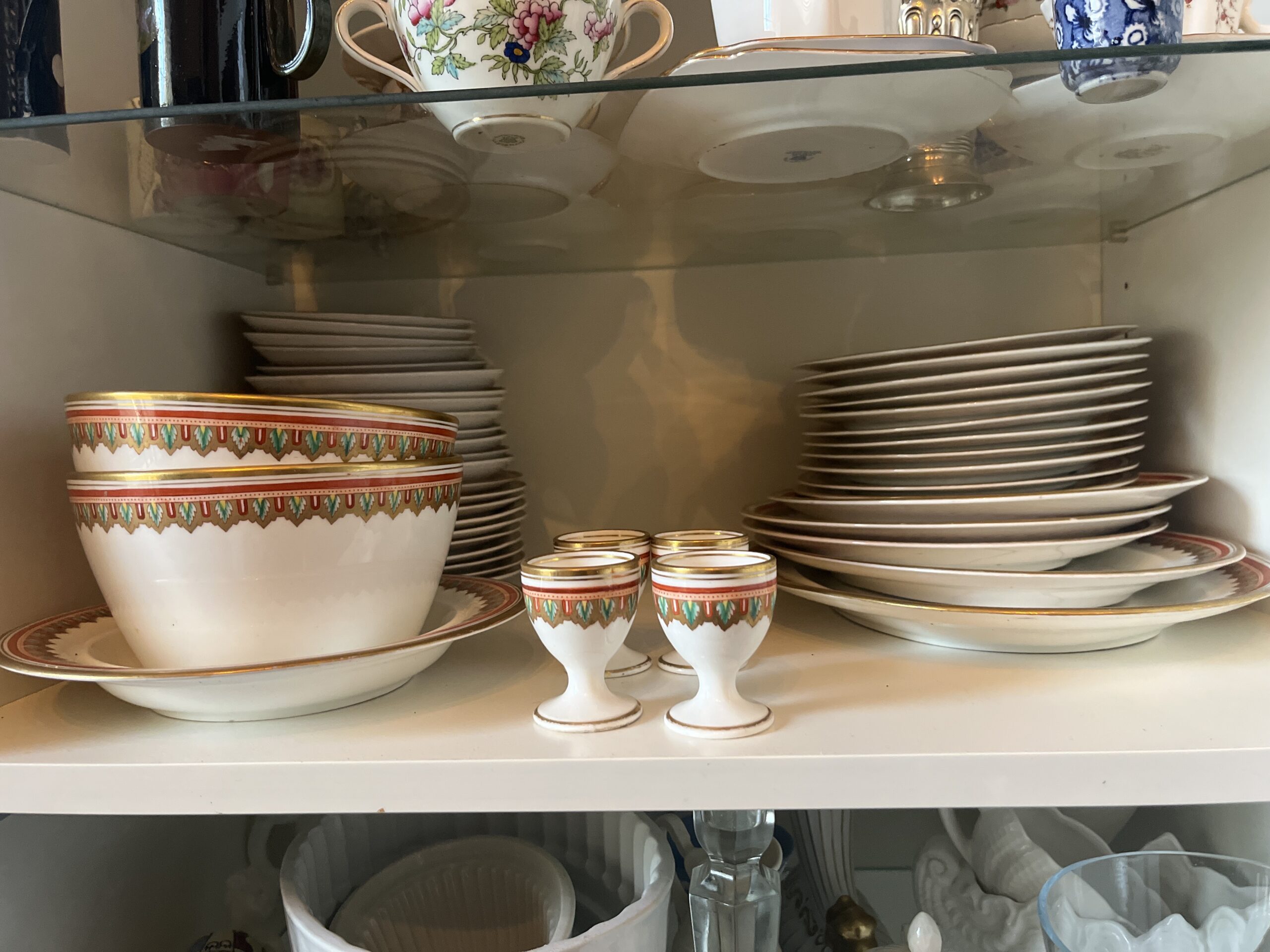
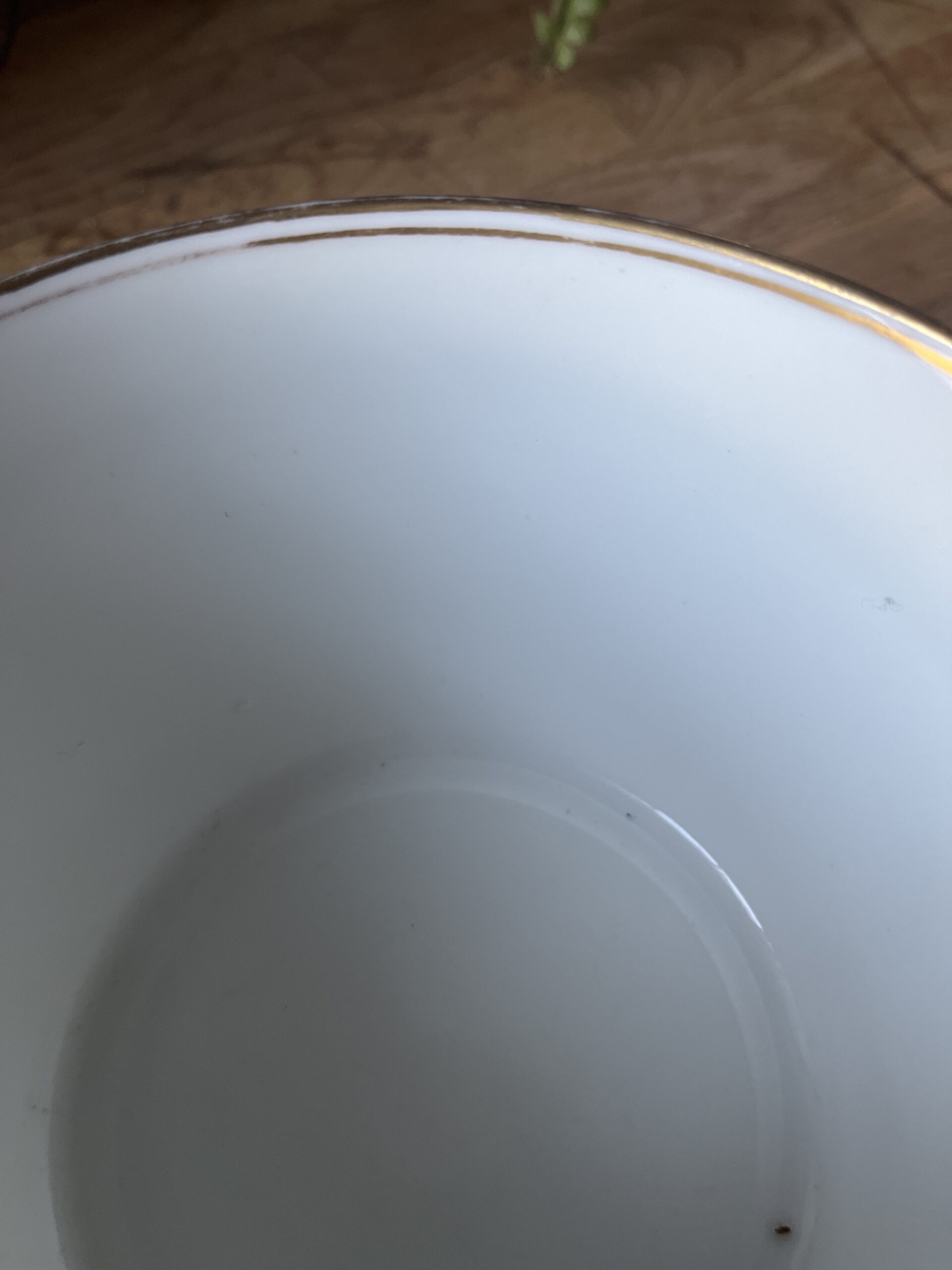
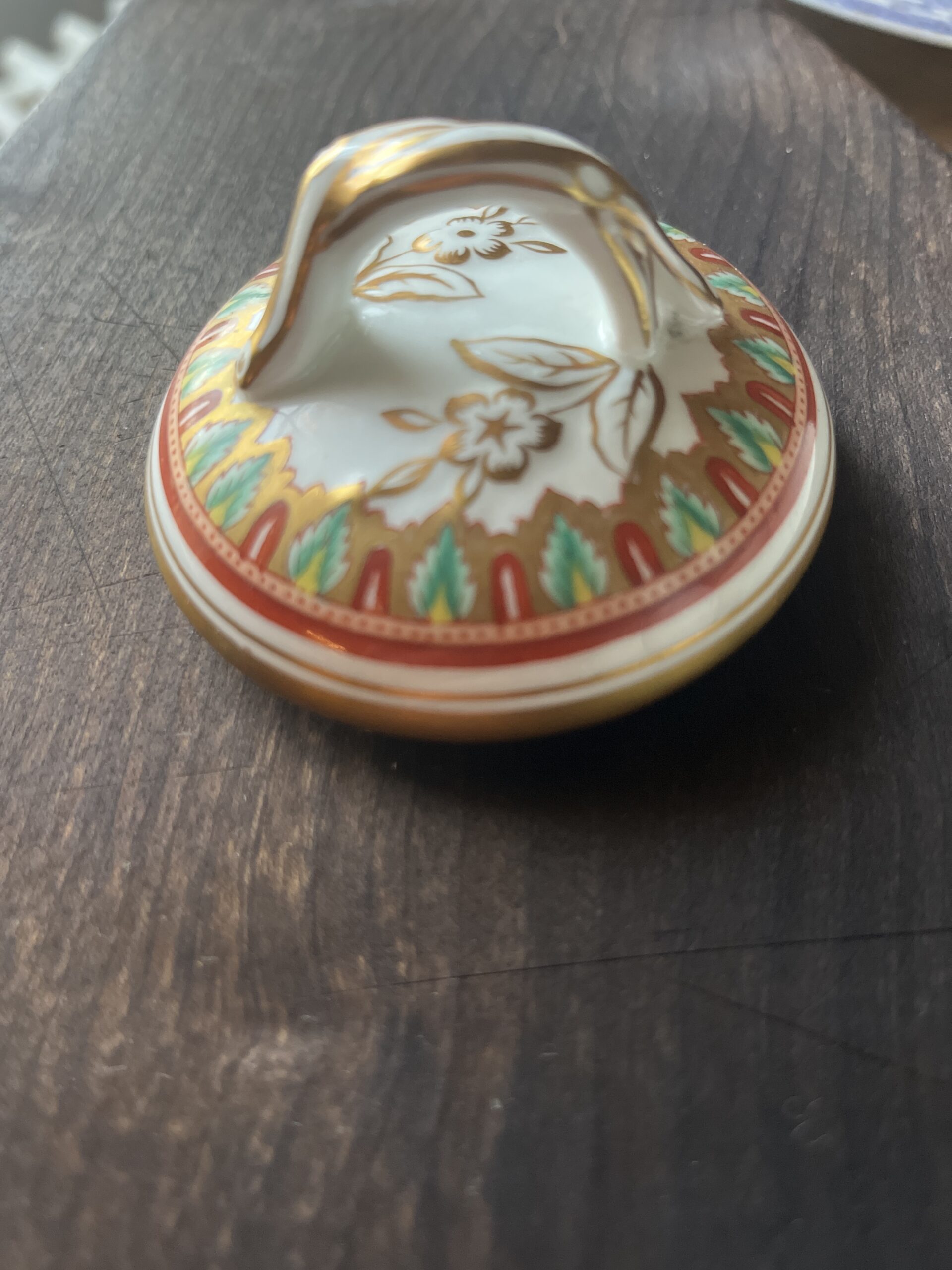
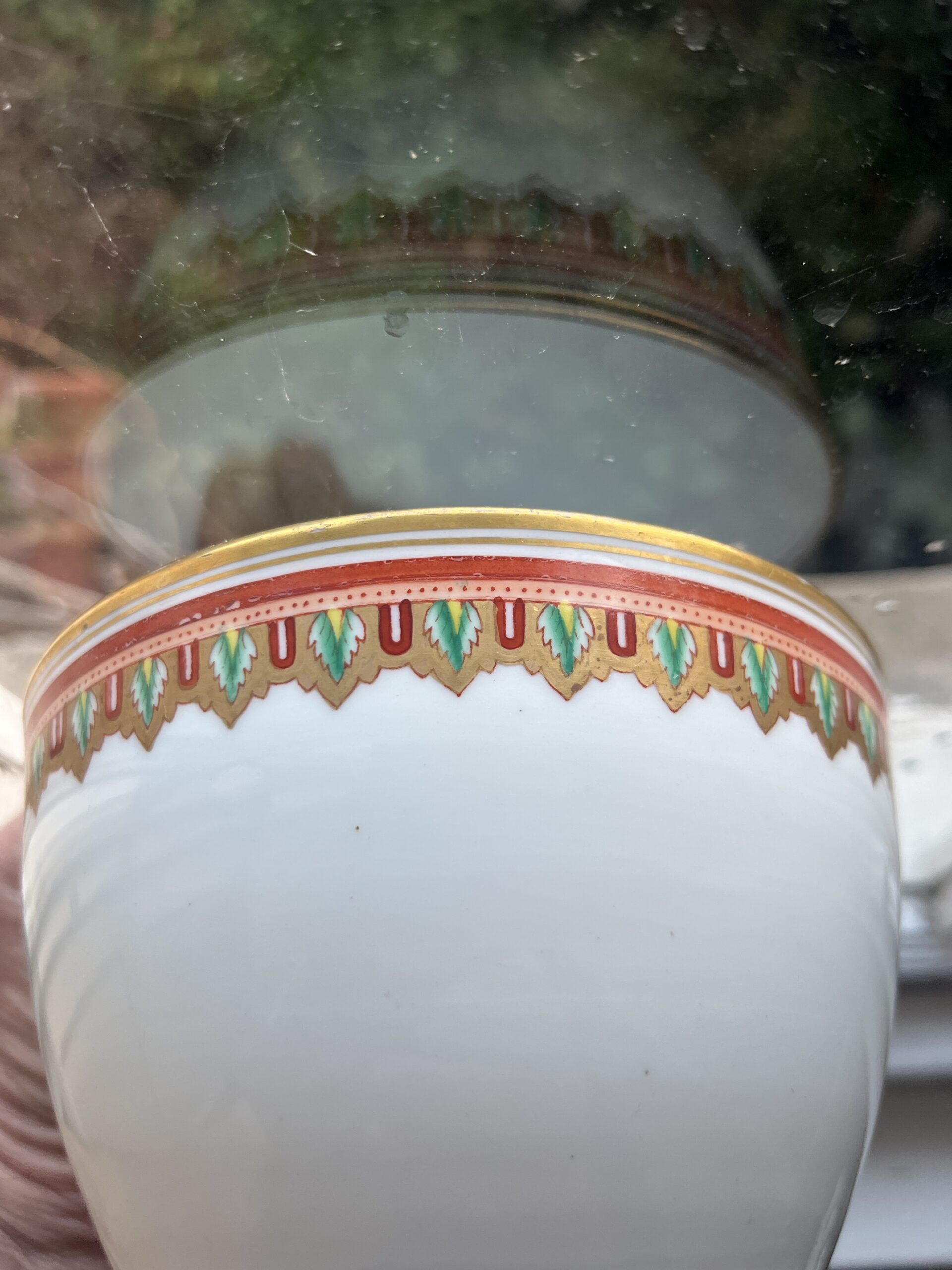
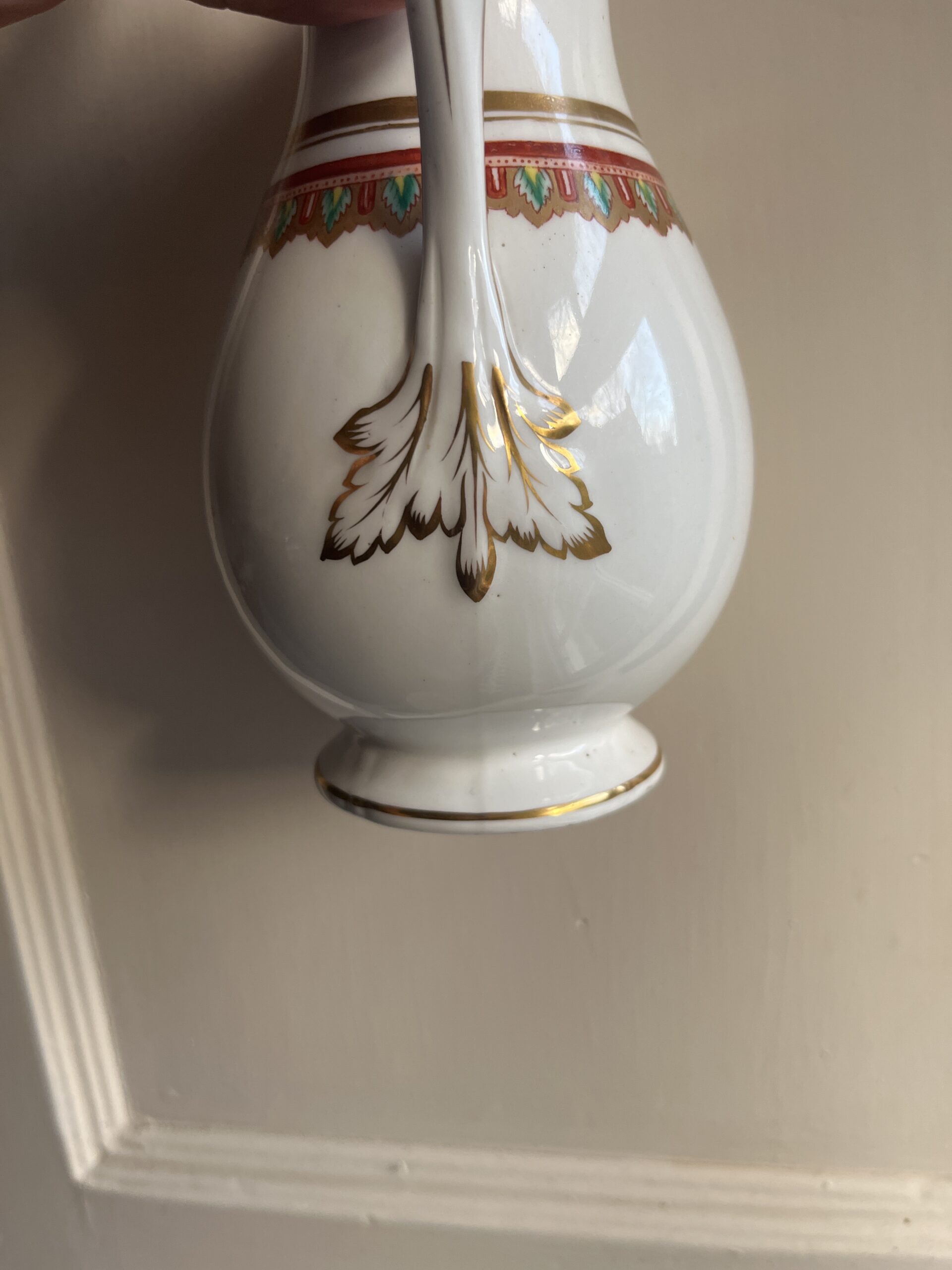
This one began with a breakfast set. Or rather, a partial breakfast set. A handful of cups, rather a lot of plates and saucers, a jug, a sugar bowl, egg cups, a couple of covered dishes. White porcelain, confident shapes, and a bold border: iron red, turquoise-green leaves, and thick gilding. It looked Victorian. It looked serious. It also looked like something that might send you down the wrong path if you weren’t careful.
That’s where passion turns into practice.
First rule: don’t guess the style
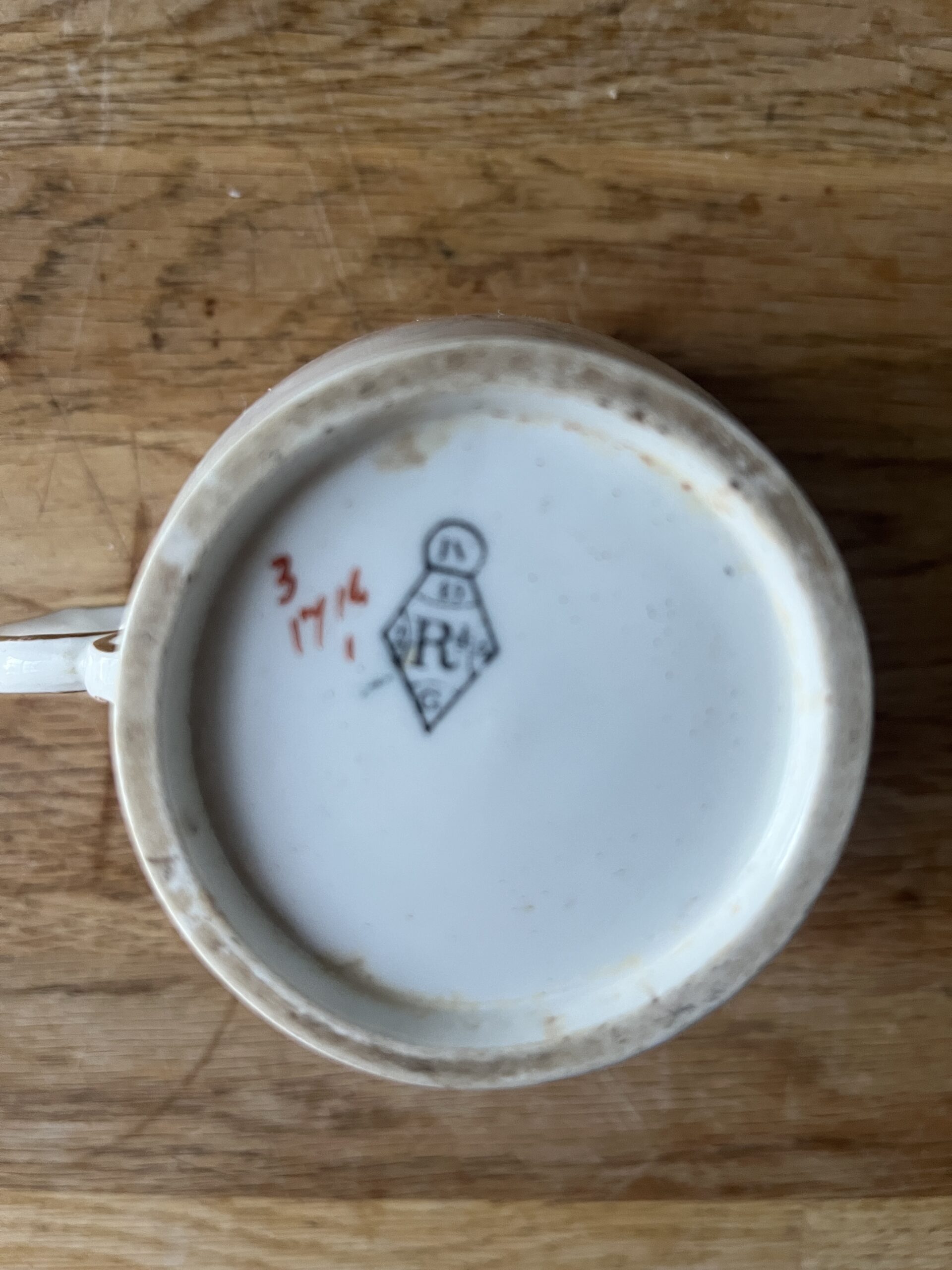
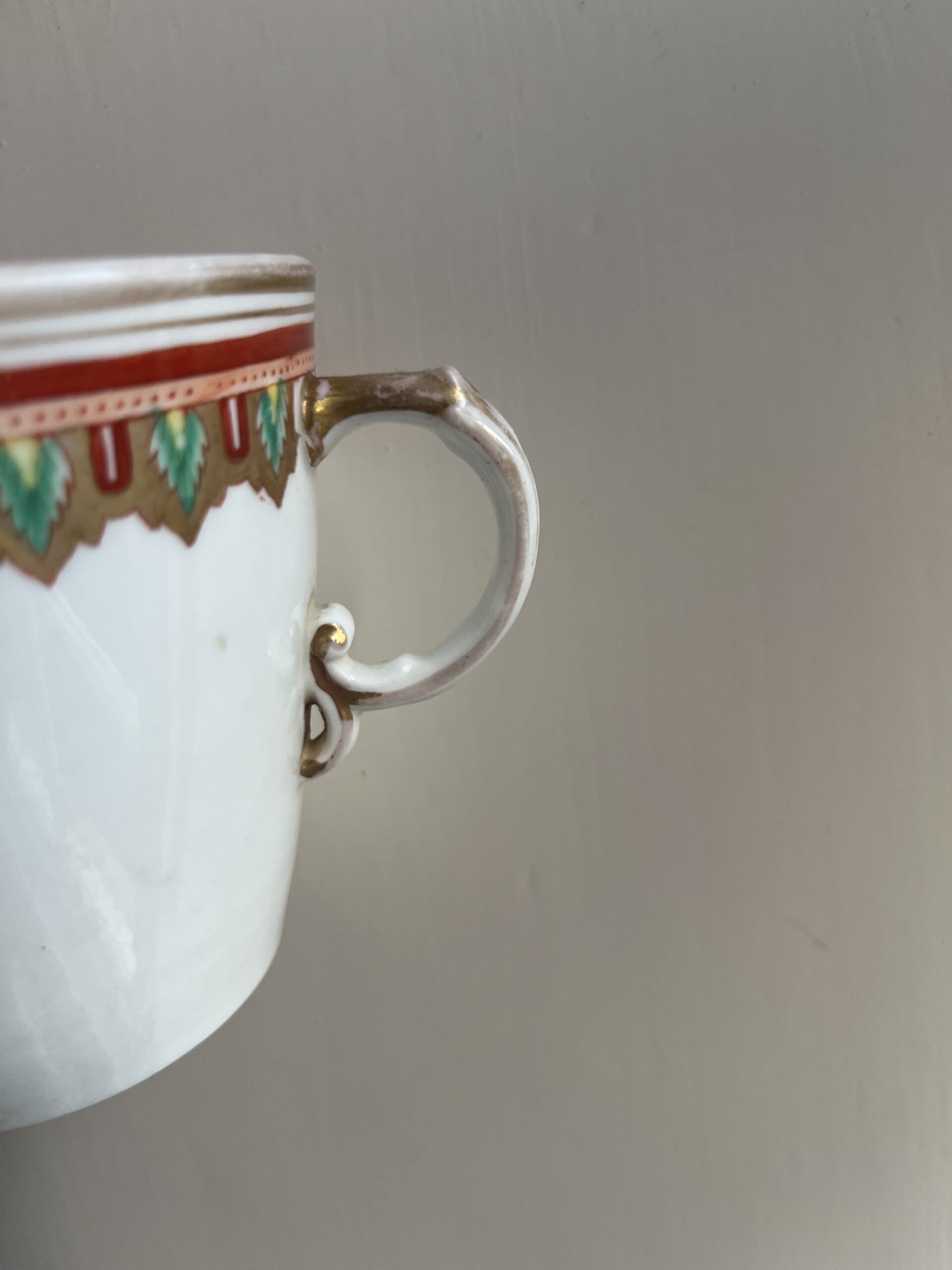
The border gets mistaken for Greek key surprisingly often. It isn’t. Look closely and you see something more mid-Victorian: a hybrid of Gothic Revival and Egyptian Revival motifs — scalloped “pylons”, hanging leaf drops, dotted red lines, heavy gold. That combination alone narrows the field to the 1840s–50s and rules out a lot of later factories.
False lead removed.
Second rule: read the marks properly — or don’t read them at all
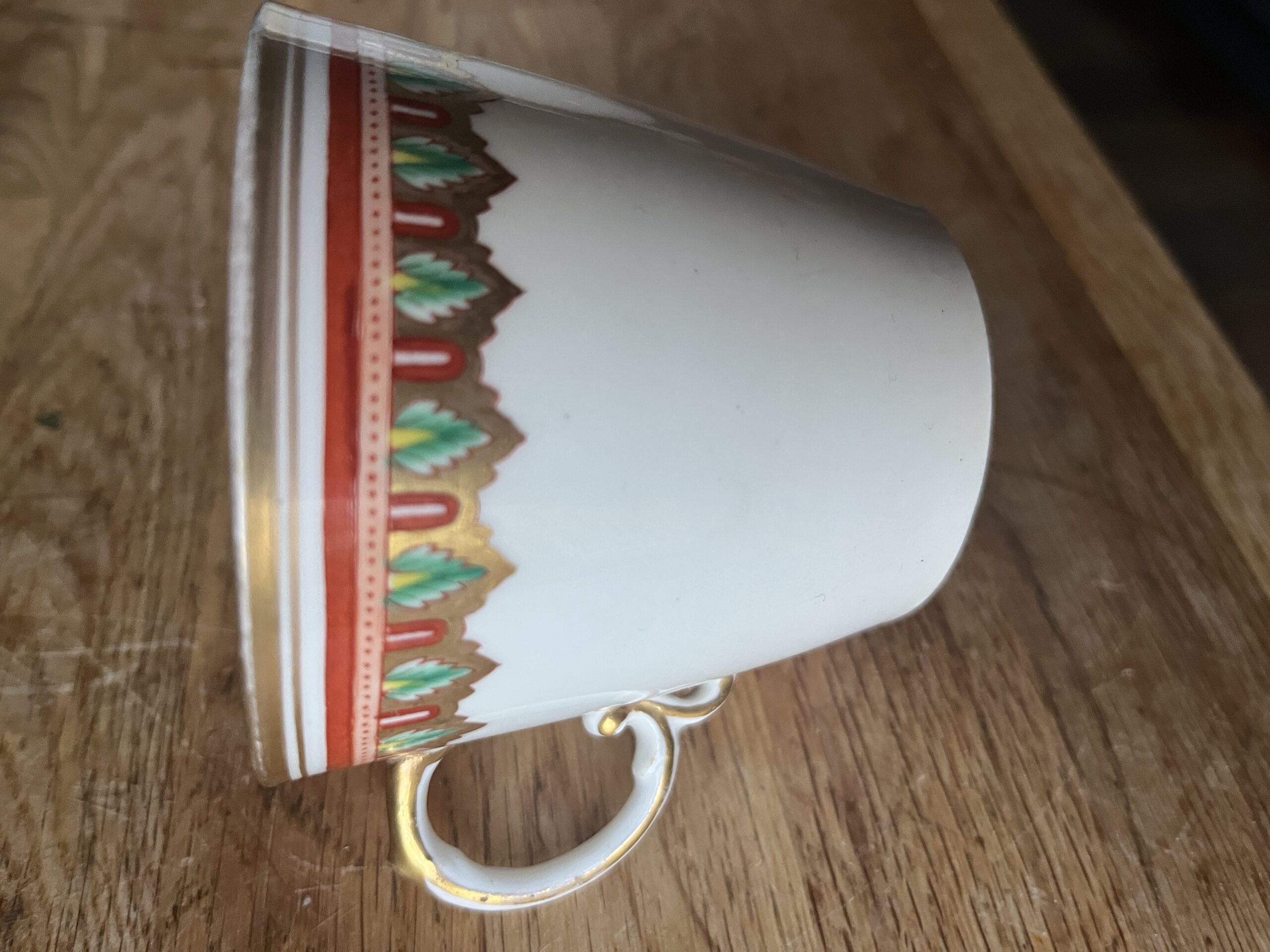
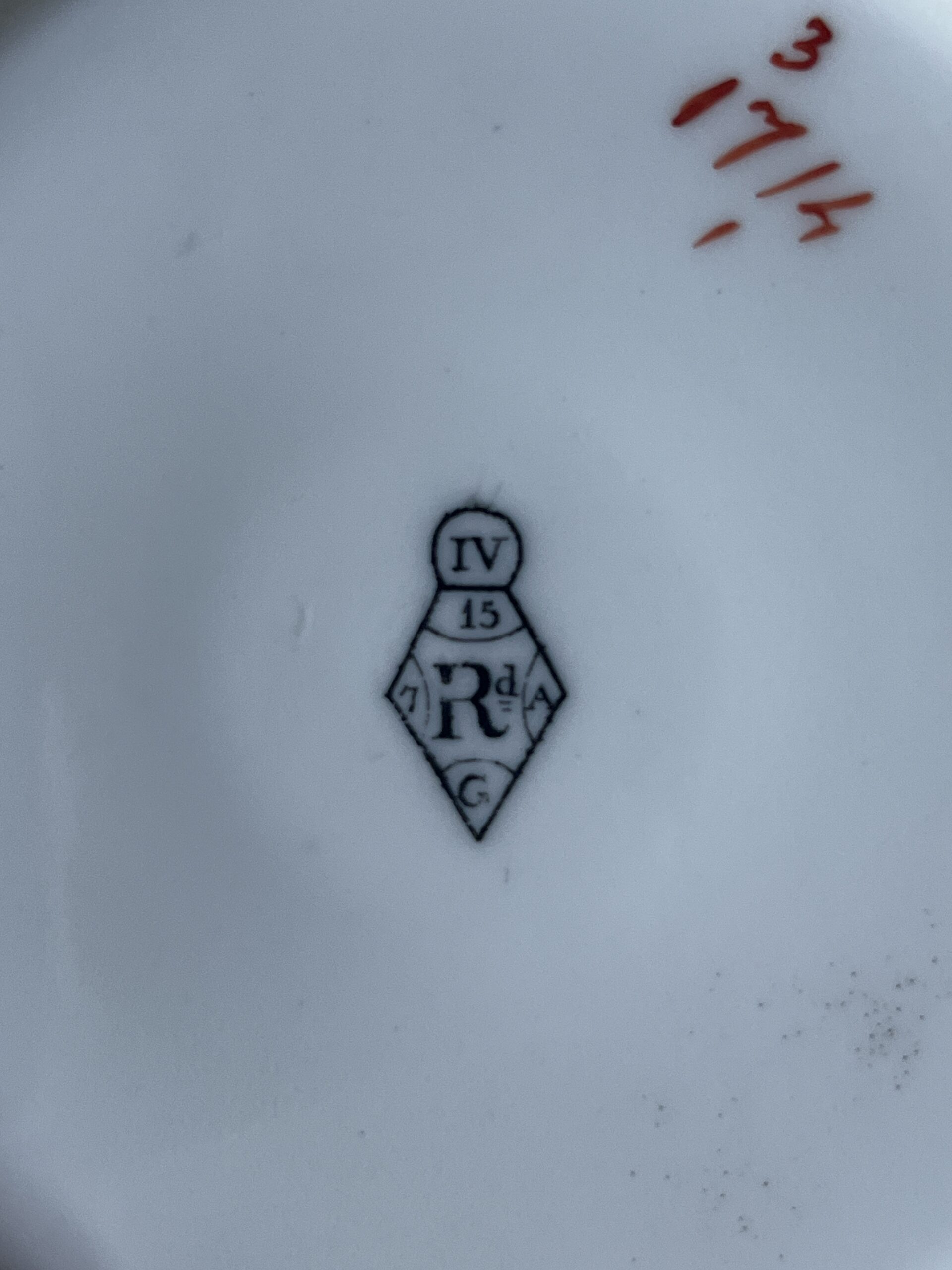
On one cup base there’s a diamond mark. That’s not a maker’s mark, and it’s not decorative. It’s a British Registered Design diamond, used between 1842 and 1883. Read correctly, it gives you a date the design was registered, not who made it.
Class IV at the top: ceramics.
Day and month coded on the sides.
Year letter at the base.
Decoded properly, it lands on 15 May 1845.
Common mistake avoided: assuming the Roman numerals mean April, or that the numbers are a pattern code. They’re not.
Third rule: ignore the red numbers
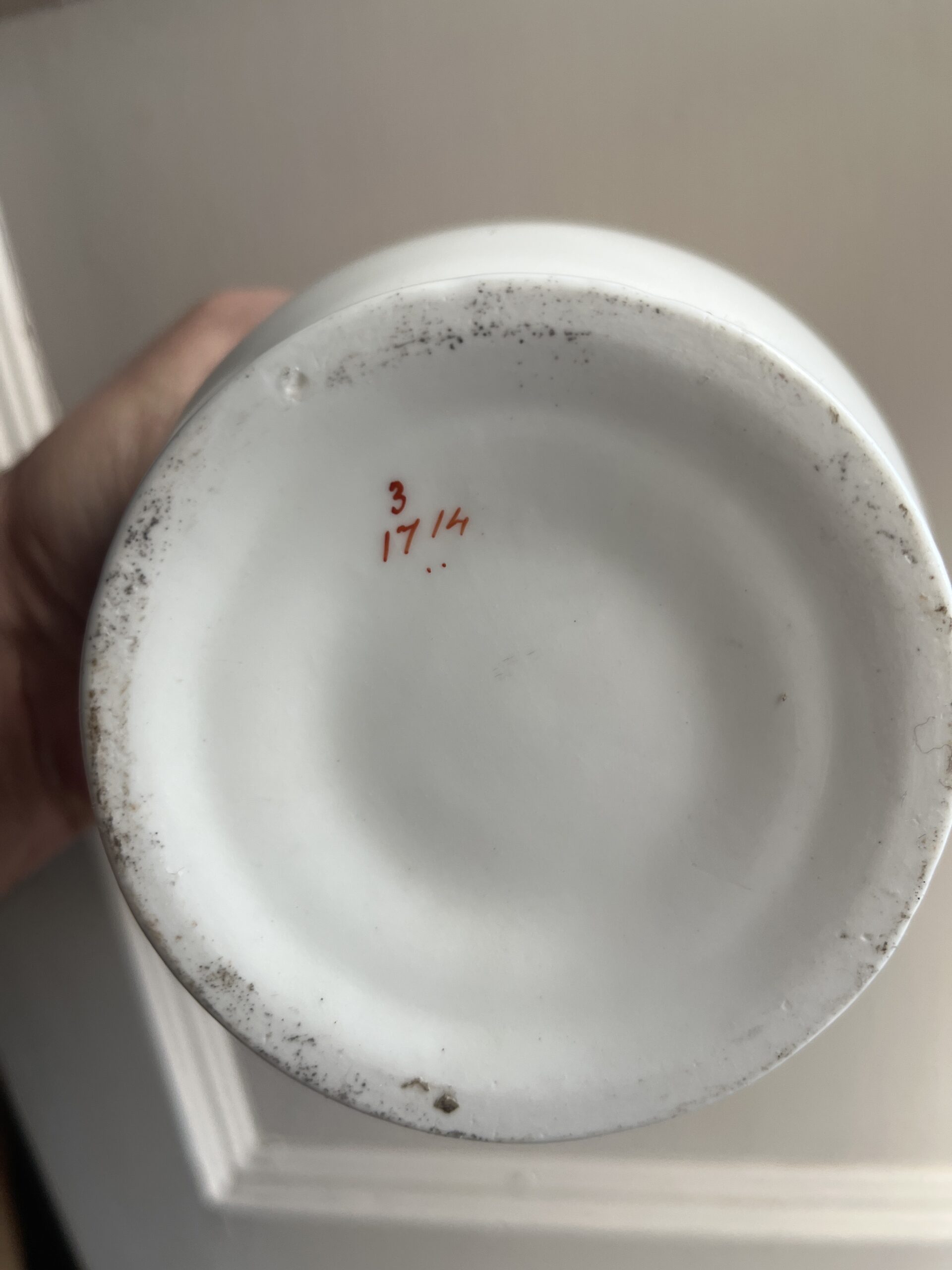
There are red handwritten numbers on the bases. They look tempting. They aren’t secret dates or lost pattern numbers. They’re painter’s or gilder’s tally marks — workshop bookkeeping so people got paid. They tell you nothing you need to know about age or value.
Another false trail closed off.
Fourth rule: trust the shapes and the hands
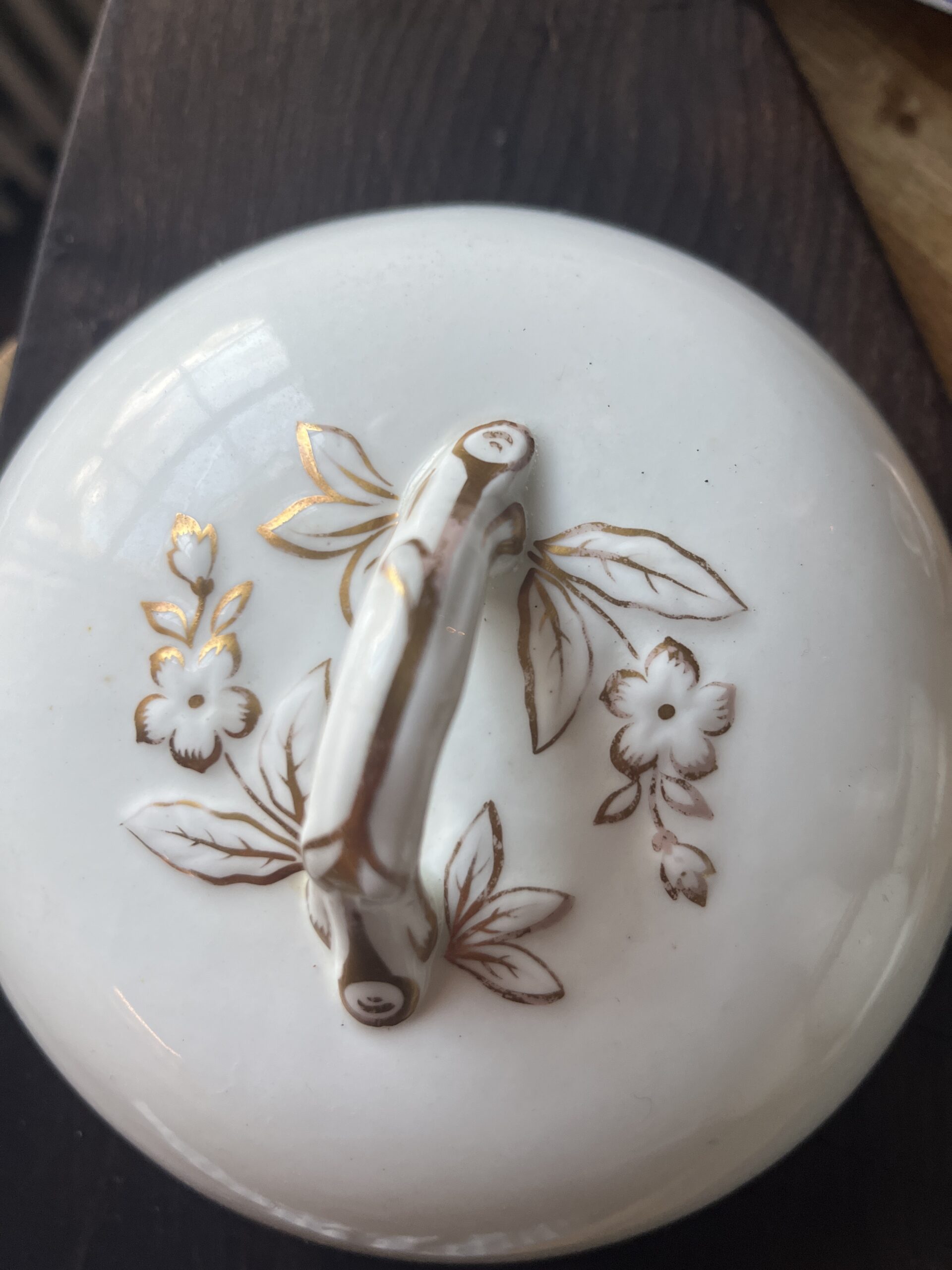
This is where experience matters. The pear-shaped jug. The domed sugar bowl. The trumpet egg cups. The heavy but confident handles with applied gilded leaf terminals. The slightly grey-white glaze, thick and glassy rather than brilliant.
These things don’t shout. They accumulate.
Put together, they point very firmly to Samuel Alcock & Co. of Burslem, one of the great mid-19th-century Staffordshire manufacturers. Alcock isn’t the flashiest name in British porcelain, but it’s an important one — prolific, inventive, and right at the heart of Victorian domestic life. In the 1840s they registered dozens of ornamental borders like this one, selling robust, stylish wares to households that expected to use them daily.
And that’s the point.
Not everything needs a price tag
This isn’t an Antiques Roadshow moment. Part services rarely are. Too many plates, not enough cups, no teapot — the market is unforgiving and frankly beside the point.
What matters is that these pieces are 175 years old and still doing their job.
They get used every day. They look good on a table. They start conversations. They come out for small celebrations. They carry a bit of family memory forward. They’re an heirloom not because they’re precious, but because they’ve proved durable — materially and culturally.
Passion isn’t about owning the rarest thing
It’s about knowing what you’re looking at, being curious enough to check your assumptions, and enjoying the slow satisfaction of getting it right.
If that sounds like you — whether your passion is ceramics, maps, local history, music, machinery, or something nobody else has thought to document properly — then that’s exactly the kind of expertise worth sharing.
What’s your passion?